Advert


Thursday, 23 May 2013

Randi Zuckerberg on Her Next Act

Randi Zuckerberg on Her Next Act: Randi Zuckerberg, former marketing director of Facebook and founder of RtoZ Media, speaks at the Executive Marketing Summit in New York.
The ex-Facebook executive and TV producer explains her plan to shake up the content business--and make her own mark on the Web.
The name Randi Zuckerberg might conjure visions of nepotism, but the Facebook founder's sister is doing her best to carve out her own space on the Web--and elsewhere.
Speaking with The Financial Times' Emily Steel Wednesday during the Internet Week conference, Zuckerberg spoke about everything from from curated content and distribution to what she playfully dubbed "tech-life balance."
When asked what compelled her to launch Zuckerberg Media, her latest foray into the online video space, Zuckerberg replied, "When I looked around at the landscape, I saw you have all these companies investing more in original content, but there were very few places for makers, for content creators."
The company, which she called her second start-up after newborn son Asher, is meant to function as a Hollywood studio for Web-produced films.
"The Bay Area has a great content history--Pixar, Lucas Film," she noted, but "getting data and insights is becoming more important to creating great content, and you have to know your audience."
It's a perspective that Zuckerberg surely picked up at Facebook, where she created and ran the social network's marketing campaigns. Specifically, she says, she got a good idea of "what a TV network built on social media might look like" when she "commandeered a broom closet" and started interviewing engineers right on the spot.
The Web series took off, and "the next day, Katy Perry called asking if she could announce her tour on Facebook Live," said Zuckerberg. Soon she was getting calls from other celebs--including President Barack Obama, who asked to host a town hall on Facebook. "That was the moment I thought, 'Someone else is going to do this. Why shouldn't it be me?'"
Flash forward three years, and Zuckerberg is busy trying to make her mark on the content business. She's been nominated for an Emmy for her 2010 coverage of the mid-term elections on Facebook Live. She produced a Bravo show called "Start-Ups: Silicon Valley," though it was panned by critics and cancelled after one season due to low viewership. Now, she says, she's on a mission to serve up quality, curated content that people will actually want to watch online.
"There is so much noise, there's so much content," she said. "You need to give someone that curator's stamp of approval," especially when it comes to TV. That medium "is still the main cultural driver of influence in this country and that stamp is important."
Recalling her experience producing "Start-Ups" she added, "You can't really just walk into a room in Hollywood and say, 'I make videos for the Web, pay attention to me!' Hollywood wants to see credibility."


Wednesday, 15 May 2013

Apply to attend the IGNITE Enterprise and Employability Training in Lagos, Nigeria

Apply to attend the IGNITE Enterprise and Employability Training in Lagos, Nigeria: Applications open
The After school Graduate Development Centre (AGDC) in collaboration with the Lagos State Government has launched the Ignite Enterprise and Employability Project to proffer a lasting solution to youth unemployment. The initiative will create an enabling environment which ignites an enterprise culture and optimal professional performance amongst youth in Lagos ...

How to Lead Great Leaders

How to Lead Great Leaders:
Leading has its challenges, but when your followers are powerful leaders you need to step up your game. Here are six helpful tips.
As a boss or team leader, you have to lead people every day. It makes life easier when you have established authority and your followers are generally compliant. But someday you may find yourself leading powerful leaders, perhaps for a board meeting, a nonprofit, or even a high-level management team. These focused and dynamic people create completely different challenges for a facilitator.
This was my exact challenge this week in London. I was honored to moderate a panel for the G8 Young Summit (G8YS) and was quickly recruited to help facilitate 35 young leaders to create an important, detailed communiqué for the heads of state from G8 countries, all in 24 hours. These young leaders, from more than 14 countries, many of whom had never before met, were described at the event by keynote Matthew Bishop of the Economist as the people who will control the world in 2030. They are all strong-willed, successful, passionate entrepreneurs with healthy egos, varied points of view, and independent agendas.
I am happy to say that after an intense and spirited discussion we achieved our goal, but only because of agile facilitation practices, some of which I knew well and some of which I had to improvise along the way.
1. Prepare
At G8YS, much of the attendee list was in flux until the day we started, so we had to work on the fly. If you are blessed with advance time, give attendees plenty of information to ready them for the discussion. Use subject matter experts to help frame the conversation in writing, preferably days in advance. Send the attendees a bulleted e-mail with key points and objectives so you don't waste valuable meeting time while preparing them for discussion.
2. Manage Expectations
Make sure your attendees are absolutely clear and aligned on both the objectives and the deliverables. Strong leaders will likely have varied views of the level of depth and detail required in a solution or document. Your job is to make sure you are all working toward the same goal. You also have to make sure the deliverables can be completed within the available timeframe or you will take the blame. Take a little extra time initially to determine a clear and appropriate scope. Then constantly remind everyone in case they stray to their own standards.
3. Keep Everyone Equal
In a free discussion, some people will dominate and others will hang back, letting others talk. Your job is to bring everyone's ideas to the forefront so all can be heard. When soliciting input, start by having everyone take a few minutes to jot down specific ideas on paper. Give them tight structure, such as asking for only two or three responses. If there is time, each person can read his or her notes. Or if consensus is close, simply vote with hands and ask if anything was missed. Don't be afraid to cut someone off if they are hogging the conversation. They might think you are a little rude and bossy, but the other people at the session will appreciate you keeping time and input in balance.
4. Maintain Clear Priorities
Passionate people will follow their passion especially when it's coming out of their mouth. Strong advocates can derail a discussion by constantly dragging it back to their own agendas. Your job is to keep the focus on the objectives and deliverables. Write down the discussion focus at the top of the whiteboard so you can simply point to it when correcting a digression. Guide the group toward expansive thinking early and then tighten the boundaries to refine and get to consensus. You have to own the conversation or your leaders will push you aside and take it their own direction.
5. Step Out of Situational Conflict
It's not your job to make people play nice. Spirited debate and healthy conflict can add to the depth of the result. When flare-ups happen, let them go, at least for a bit. Otherwise your participants will feel stifled or unresolved. Let them express enough to verify they have been heard without overusing the time required to complete your task. Of course, recognize that strong advocates may never feel fully heard if the group agrees to go a different way. In this case, make sure that you acknowledge the issue and focus the advocate on the need to meet objectives and deliverables within time constraints.
6. Be Firm but Gracious
When facilitating leaders you have to show strength and self-confidence. You may or may not have time to build trust, but you still have a job to do and you are accountable for completing the task. Many in the group may feel they could do better and they indeed may be right, but this is your session and you must take absolute ownership even if it means politely rejecting the people you admire and respect. As long as you keep a sense of humor and advocate for the priority, most leaders will respect your approach within the context of a difficult challenge. Make sure at the end you acknowledge the participation and patience of each member of your group. Show appreciation and grace; voice your pride in the successful accomplishment of the team deliverables.
Like this post? If so, sign up here and never miss out on Kevin's thoughts and humor.


4 Reasons to Become a Mentor

4 Reasons to Become a Mentor:
No one says you have to help out a fledgling fellow entrepreneur once you've found success. But there are some pretty compelling reasons to do so.
One of the enduring mysteries of human nature is why a very successful business person would give away his time to help an up-and-comer. After all, given the mentor’s success, he easily could charge the protégé $500 an hour for the valuable advice and contacts that he has pulled together during his career.
And yet mentoring is a widely accepted practice. To figure out why, I spoke with Mike Bergelson, CEO of Everwise, a service that connects mentors and protégées. It’s a mentoring company that benefits from being near a key mentor. Bergelson--who started Audium, a software company in New York City that Cisco acquired in 2006--ended up moving to California as a Cisco executive.
He left Cisco and pulled together the team from the software start-up to work on business ideas. But Everwise did not gel until 2012 when Bergelson discussed these ideas with Maynard Webb, his mentor, whose Webb Investment Network (WIN) offers “young entrepreneurs seed capital, mentorship, and on-demand access to experts.”
Thanks to his conversations with Webb, Bergelson decided to focus solely on mentoring. As he explained, “Maynard asked questions that made me realize that I had a passion for creating a way for corporate protégés to find mentors and that addressing that need could be a big opportunity.”
Bergelson knew first-hand how commonly big companies miss the opportunity to match protégés with mentors. That’s because when he was working for one of those big companies, he was given the name of his mentor. That person never responded to Bergelson’s email suggesting a meeting. A few weeks later, the mentor had quit and the company never gave Bergelson another.
Still, Bergelson believes mentoring is a great way for big companies like his former employer to develop talent. A study by a former Sun Microsystems executive found that employees who received mentoring were five times more likely to be promoted. And a study of successful people like Warren Buffett found that the second most important reason they believe they’ve been successful is great mentors (Buffett’s was Benjamin Graham).
Everwise has developed an algorithm that has contributed to a “96 percent match satisfaction rate.” Assuming that’s true, Bergelson should be an authority on why people agree to serve as mentors. Here are his four top reasons.
1. Give Back
Successful people I have interviewed often say that they were helped early in their career by someone who had achieved greatness. Now they believe that they should “pay it forward.”
But why do they feel that way? Some feel that they are repaying a debt to future generations; others believe that if their advice helps a younger person, it will make a little piece of them immortal; still others see mentoring as going back in a time machine and giving a younger version of themselves the advice that they wish they had received.
This last reason highlights the importance of matching the right mentor and protégé. After all, if a mentor finds a young person with similar life experiences--such as emigrating from Chile or competing in triathlons--it will strengthen the feeling of giving back to a younger version of herself.
2. Learn From Process
Many mentors claim that they learn by teaching. This observation brings to mind the Seinfeld episode about mentoring. In case you missed it, George Costanza needs to learn about risk management so he asks his protégé to record herself reading the book to him. (Naturally, Costanza took the idea of learning from mentoring and turning it on its head.)
Bergelson said that many mentors learn through the process of teaching others and they find that mentoring makes them better leaders. He said that 94 percent of mentors agree to repeat their experience because they “take away a lot from the process.”
3. Meet New People
Mentors also like the idea of meeting new people whom they can add to their “I knew when” list. After all, who doesn’t like the idea of bragging to associates that they knew [currently famous person X] before they became successful?
For mentors with this motive, there is also a potential financial benefit. The protégé might offer the mentor an opportunity to invest in an early-stage venture. And if that happens, the mentor may not only get bragging rights but a big slug of cash when he sells stock in the now successful venture.
4. Get Exposed to New Ideas
Protégés also expose mentors to new ideas. For example, the protégé might discuss how her company is using a new approach to innovation, pricing, or customer service. Mentors may be able to apply some of these best practices to their own activities.
People are willing to mentor for free because they already have--in the context of Maslow’s Hierarchy of Needs--met their physiological and safety needs and now seek esteem and self-actualization. Mentoring is a way to get there.


Wednesday, 8 May 2013

Opinion - Why Women Can’t Have Unemotional Sex By Preston Waters

Opinion - Why Women Can’t Have Unemotional Sex By Preston Waters:


Actress Afro Candy Produces Nigeria’s First Hard Core Porn Movie

Actress Afro Candy Produces Nigeria’s First Hard Core Porn Movie:


4 Reasons Business Owners Are Not Confident About the Economy

4 Reasons Business Owners Are Not Confident About the Economy:
Take a closer look at some of the fundamentals underlying the recent positive economic news.
In its monthly "beige book" report, the Federal Reserve recently reported moderate economic growth across the country. This was backed up by gross domestic product numbers, which showed a 2.5 percent annualized growth in the first quarter--a significant improvement from the 0.4 percent annualized growth from the fourth quarter of 2012. The unemployment rate continues to tick down. Personal income and spending both increased, pending home sales reached a three-year high, new residential home sales improved, and home prices are surging. The American auto industry had its best performance in 20 years. Most economic indicators seem to be in the normal range.
But--hold on a minute. A recent report found that U.S. home ownership fell to its lowest level since 1995. Both manufacturing activity in the country and orders for durable goods plunged last month. A Kauffman report revealed that entrepreneurial activity declined last year, and the National Federation of Independent Businesses said last month that small business confidence remains at historically low levels. If that's not bad enough, the University of Michigan said that consumer sentiment fell to a three-month low, and, separately, port traffic in the Los Angeles area decreased in March. Things are so gloomy that more than 12 million Americans actually believe that lizard people are running the country.
So is the economy in good shape--or not?
Why are so many small business owners still not feeling as confident as they did a few years ago? The fact is that most of the business people I speak with are very tentative, still uncertain, and still very concerned about some of the fundamentals underlying the numbers.
Here's four reasons why:
1. A deficit decline is not sustainable.
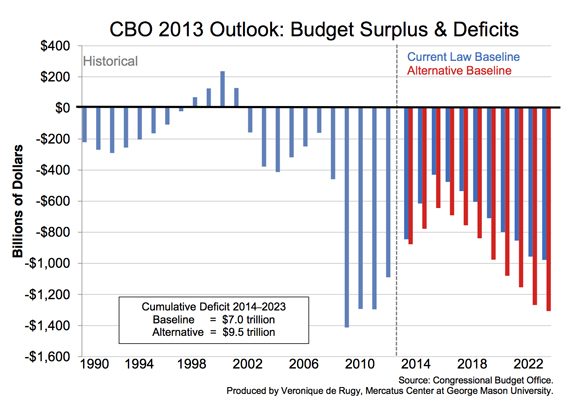
Since 2009 the country has become accustomed to a trillion-dollar annual deficit. I've been watching, with a growing sense of panic, the U.S. national debt, which is now approaching $17 trillion and is, for the first time in U.S. history, greater than the entire national output. But some are celebrating. That's because many projections now show that, with rising tax receipts and some cuts in government spending, the deficit this year is projected to fall to under $800 billion. And the projected annual deficit is estimated will decrease to as little (as little?) as $600 billion by 2015. This doesn't mean the deficit is under control, and you know it. Back in 2007, the deficit was "only" $161 billion and even that was too high. Remember, this is all adding to the country's national debt. And after 2015, the deficit is projected to increase yet again, soon surpassing a trillion dollars a year as the costs of health care, social security, and other entitlements begin kicking in with a vengeance. The business owners I know aren't buying into the myth that the deficit is coming down. The long-term debt could affect the U.S. economy as it's now doing in parts of Europe: rising interest, cuts in spending, tax increases, exchange rate fluctuations, economic turmoil. A decrease in the deficit is purely a short-term thing. I'm concerned about the long term.
2. The stock market boom does not indicate a strong economy.
No one is complaining about the recent rise in stock prices. The benefits of a strong stock market are enormous for small business: It gives customers confidence to spend, adds to a general feeling of optimism in the market, and sure feels good to see my own investment accounts going up, particularly since I have college tuition bills looming. But many business owners I know have serious doubts about the strength of the stock market. Why? Because with easy money flooding the market from the Fed, interest rates so low, and real estate barely recovering, where else is there to invest but the stock market? It's pretty much the only choice for someone not willing to take an enormous amount of speculative risk. So the money flows to the stock market, and prices go up. Does this mean that the market's growth is truly indicative of a strong economy? Or is it a temporary phenomenon? I'm wary, and trying to limit my exposure.
3. Inflation is not dead.
I have to give credit where credit is due: the Federal Reserve has managed to keep inflation pretty much under control for the past 25 years. This has helped keep U.S. prices competitive, costs under control, and interest rate risk at a reasonable level. But if you dig into this, like I did, you get concerned. As shown here, the Fed's balance sheet has literally exploded over the past few years because of the Troubled Asset Relief Program (TARP) and bond purchases. These initiatives were done with good reason--to provide liquidity to struggling markets. But what if the economy grows more than expected? What if the demand for new loans substantially increases, and excess reserves are drawn down by banks eager to fill the needs of their customers at a rate that's faster than the Fed can control? What if the Fed's exit strategy isn't effective? It's a very high risk game and, if mistakes are made, inflation, followed by high interest rates, could very well happen. Inflation is not dead. It's a dangerous animal that is, for now, kept in its cage. I'd bet you're watching and hoping that this cage holds like I am.
4. Corporations don't have as much cash as it seems.
There's no doubt that companies have a lot of cash on hand. In fact, recent numbers show that non-financial companies have about $2.3 trillion in their bank accounts, a historical high. But this number is misleading. As financial analyst James Bianco explained in this great column: "Liquid assets held on companies' balance sheets is a nominal number, much like the nominal level of GDP, that rarely decreases. Of course cash on the sidelines is at a record nominal level; it usually is. This series must be compared to other balance sheet items for relevance." He uses a chart to explain it: In 1952, 40 percent of companies' total assets were "liquid assets" (cash), and that number is down to only 15 percent today. "It is not as though companies currently have 40 percent of their assets in the form of cash waiting to be invested, as was the case in the 1950s," says Bianco. If investment opportunities become more "enticing," and companies see a potential to make a profit, these levels will drop to the 30-year historical norm of 10 percent or 11 percent.
These are concerns. But no reason to panic. There are always concerns. And one great thing about being a business owner is that you're a glass-is-half-full person. The country is at the very beginning cusp of an energy boom, has tremendous technological resources, a market full of skilled people, and a free economy that is enjoying low interest and low inflation. Of course there are challenges, but no matter how much I complain, there is not a single business owner I speak to who would prefer to be living, raising her children, and doing business anywhere else but in the United States. And that speaks for itself.